
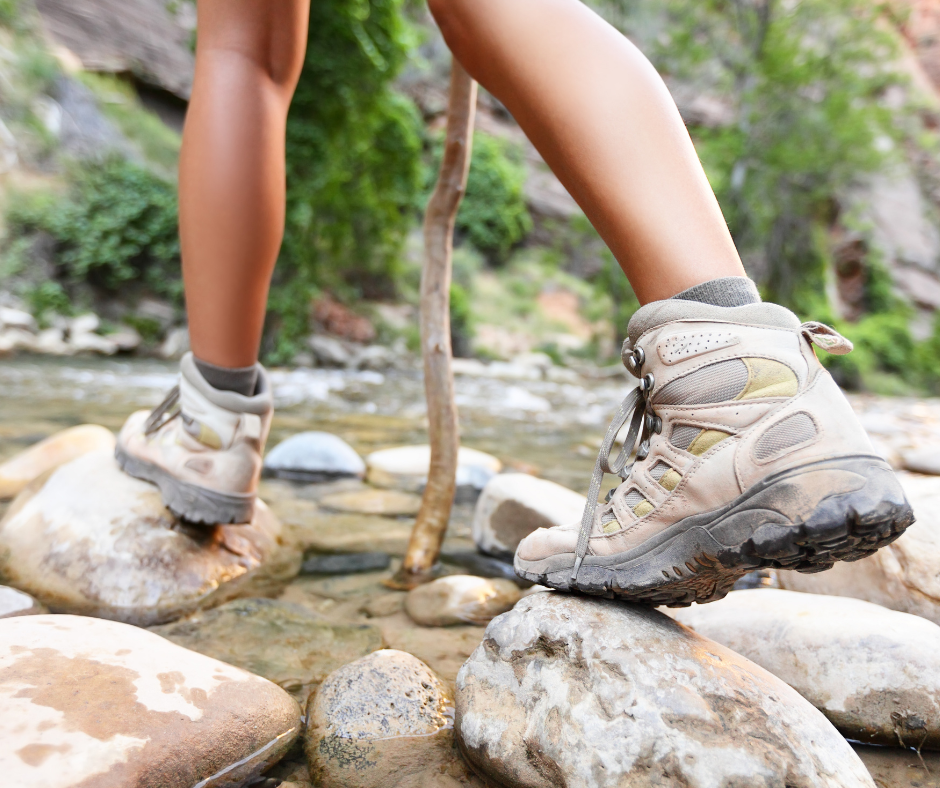
How Do I Prevent Foot Pain While Hiking This Labor Day Weekend?
Labor Day weekend is the perfect time to hit the trails, but uneven terrain and steep descents can quickly turn a scenic hike into a painful ordeal. Before you lace up for one last summer adventure, make sure your feet are protected against the most common trail injuries. Oak Foot & Ankle digs into the details below.
The Downhill Dilemma: Preventing “Toe Bang”
While climbing up a mountain burns your lungs, hiking down is what destroys your feet. As you descend steep grades, gravity forces your foot to slide forward inside your boot with every step. This repetitive smashing of your toes into the stiff front of your hiking boot is known as “toe bang.”
Over the course of a few miles, this trauma causes blood to pool under the nail plate, resulting in painful, bruised, or blackened toenails that eventually fall off.
To prevent this, you must lock your heel in place:
- The “Heel Lock” Lacing Technique: Before a long descent, re-lace your boots using the heel lock (or “runner’s loop”) method. This uses the top eyelets of your boot to create a pulley system that tightly secures your heel to the back of the boot, stopping forward sliding entirely.
- Trim Straight Across: Always cut your toenails straight across and file the edges before a hike. Nails that are too long will hit the front of the boot first, absorbing the full force of your body weight.
Navigating Uneven Terrain: Ankle Sprains
The woods are full of hidden hazards: loose rocks, slippery roots, and hidden divots. As you become fatigued later in the day, you become much more susceptible to a severe inversion ankle sprain (when your foot suddenly rolls inward, stretching or tearing the ligaments on the outside of your ankle).
If you are searching for the best hiking boots for foot pain, you need to prioritize structural support over plush cushioning:
- Rigid Soles: A stiff sole acts like a rock shield. If you step on a sharp root in a flexible sneaker, your foot must contour around it, increasing your chance of rolling. A stiff boot absorbs that uneven point of contact.
- High Ankle Collars: Mid- or high-top boots provide crucial proprioceptive feedback (reminding the muscles around your ankle to stay engaged) and physical bracing when you misstep.
- Custom Orthotics: If you naturally overpronate (your arches collapse inward), you are already at a structural disadvantage. Sliding a custom orthotic into your boot stabilizes your kinetic chain from the ground up, significantly reducing your risk of a rollover injury.
Do Not Ignore Trail Injuries!
Taking care of your feet on the trail ensures you can enjoy the rest of your holiday weekend. However, if you do roll an ankle or experience sharp, stabbing pain in your arch that doesn’t subside with rest, do not try to “walk it off.”
Ignoring a severe sprain often leads to chronic ankle instability and early-onset arthritis. We can accurately diagnose your injury and get you back on your feet safely.
Oak Foot and Ankle in Oak Lawn, IL, provides expert podiatric care for patients of all ages. Specializing in sports medicine, diabetic foot care, and innovative treatments, we help you stay active and comfortable. Need assistance? Contact us today!
