
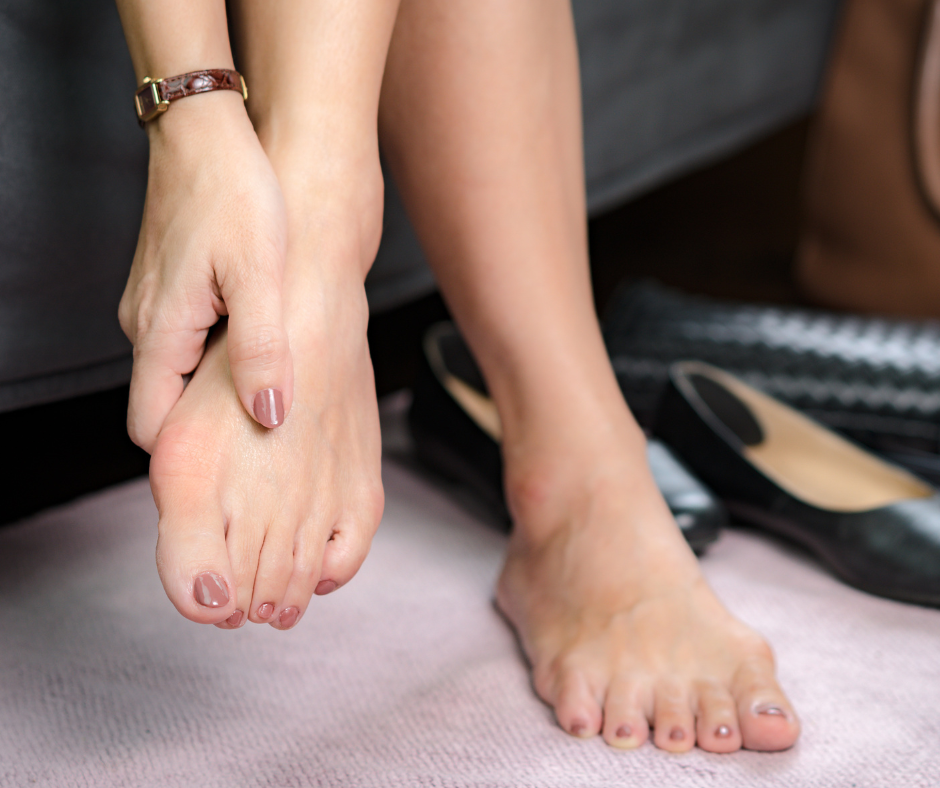
How to Handle Your Hammertoe at Home
(And When to Call a Podiatrist!)
When you pitch a camping tent, the canvas fabric is designed to rest smoothly and evenly over the internal frame. But if one of those internal poles is suddenly bent out of shape and buckles upward, it immediately creates a massive point of friction. Eventually, that sharp point will rub a hole right through the roof of the tent.
If you have noticed a painful, hard bump forming on the middle joint of your second, third, or fourth toe, your foot is experiencing that same structural failure. This condition is clinically known as a hammertoe. And in this blog, Oak Foot & Ankle covers how to manage it at home…and when signs suggest that you need professional care.
The Biomechanics of A Buckling Toe
Your toes do not bend and buckle upward by accident. Your foot is essentially a complex suspension bridge made of bones, ligaments, and tendons. The tendons on the top of your foot lift your toes, while the tendons on the bottom pull them downward.
A hammertoe forms when the delicate tension between those “cables” is destroyed.
- Often due to inherited foot structure (like severe flat feet), neurological conditions, or decades of wearing tightly cramped footwear, the tendons on the bottom of your foot become chronically tight.
- They begin to overpower the top tendons, forcibly pulling the middle joint of your toe upward into a sharp, inverted V-shape.
- Once those joints buckle, it becomes the highest point of your foot, immediately crashing into the “roof” of your shoe.
Three Signs the Tension Is Getting Worse
Like bunions, hammertoes are progressive structural deformities. They will never spontaneously straighten themselves out. If left ignored, the tendons will continue to contract, and the joint will buckle higher.
Watch for these three distinct warning signs:
- The Formation of Corns: Just like the tent fabric wearing down, your skin will try to protect the bone from the constant friction of your shoe. It does this by building up thick, hard layers of dead skin directly on top of the buckled joint. These corns feel like hard pebbles pressing into your nerves and can become very painful.
- Loss of Flexibility: In the early stages, you can usually take your fingers and physically press the buckled toe back flat against the floor. If you try to push the toe down and it feels locked in place, the joint has become rigid. The deformity is now permanent without medical intervention.
- Pain at the Ball Of The Foot: As the toe curls upward, it forces the corresponding metatarsal bone (the knuckle at the base of the toe) downward. This creates intense, burning pressure on the ball of your foot when you walk barefoot.
DIY Hacks to Stop the Friction
If your toe is still flexible, your immediate goal is to remove the friction and manage the structural tension. Here are three actionable strategies you can deploy right now:
- Change Shoes: You must stop wearing tapered, shallow shoes. Switch to footwear that features a wide, extra-deep toe box. If the fabric of the shoe is not physically touching the buckled joint, the pain of the friction will vanish.
- Deploy Crest Pads: These small, over-the-counter silicone rings sit directly underneath the affected toe. They act like a tiny crutch, gently lifting the tip of the toe to flatten the buckled joint and relieve the tension on the tight tendon.
- Avoid Medicated Corn Pads: Never use over-the-counter medicated corn removers. These contain harsh acids designed to burn away dead skin, but because the buckled bone is pressing right against the surface, these acids frequently cause severe chemical burns and dangerous infections.
When To Call Oak Foot and Ankle
If you have upgraded your footwear but are still experiencing daily pain, or if your toe has become completely rigid and inflexible, conservative DIY methods have reached their limit.
Whether we balance your tendon tension with prescription custom orthotics or perform a quick, minimally invasive release to permanently straighten the joint, we have the advanced solutions you need. Get in touch and start feeling better!
Ready to get back to your active lifestyle? Oak Foot and Ankle in Oak Lawn, IL, provides expert podiatric care for patients of all ages. Specializing in sports medicine, diabetic foot care, and innovative treatments, we help you stay active and comfortable. Need assistance? Contact us today!
